Saturday, July 29, 2006

Connoisseur Kambar - Part 1

Kambar, the greatest poet of all times that Tamil Literature has seen, is a remarkable person and the only one to be crowned with the title Kavi Chakravarthi (Emperor of poets). Many people have written a lot about Kambar and his achievements, but we will see a few interesting bits in his life. His greatest work was Ramayana in Tamil called "Kamba Ramayanam" after his name and publishing such a great work earned him the name Kavi Chakravarthi. It is one of the best unparalleled literary work of all times. No one ever has created such a great work. His work consists of more than 10,500 verses depicting the story of Lord Rama. And hence the name Kavi Chakravarthi is crowned to him. He is the one and only Kavi Chakravarthi.

Kambar was born in a place called Therazhundhur, near the famous Thanjavur District. The place comes under reign of the Chola Kingdom. Kambar grew up and did his literary work in the Chola Kingdom but spent the rest of his life, after becoming the Kavi Chakravarthi, in a place called Naatarasan Kotai in the Pandya Kingdom. There is an interesting legend behind the switching of kingdom by Kambar.

Kambar published his great work at SriRangam Ranganathar Temple, a place near Thiruchirapalli (Trichy). The mandapam (corridor) where Kambar made the rendition still exists in the temple and is called the Kambar Mandapam. A few years later after being crowned the Kavi Chakravarthi, Kambar took pride and wanted to show his poetic talent at the Tamil Sangam at Madurai. So he went on his way to Madurai to meet the Pandya King and proclaim his achievement at the Madurai Tamil Sangam. He was in Naatarasan Kotai a place near Madurai and that is where the interesing event happened. Kambar wanted to know the way to Madurai in order to meet the King. So he saw a young boy herding cattle and asked him the way to Madurai. They boy asked Kambar, who he was and why he is going to Madurai. Kambar with pride told that he is Kavi Chakravarthi and he wants to meet the king to proclaim his achievement. The boy did not understand what is meant by Kavi Chakravarthi and asked Kambar what it meant? Kambar's pride grew no bounds told that it means the one who has learnt everything and he is one such person. This intrigued the boy and he asked Kambar if he could tell the letter (alphabet) that he writes on the sand; if Kambar was truly such a learned person. Kambar took it lightly, smiled at the chap and told to write the letter thinking what strange letter or unknown alphabet the boy could write in front of the great Kavi Chakravarthi. To his surprise, the boy drew a wavy line from top to bottom like that of a snake and asked Kambar what that letter was. Kambar got totally confused as there is not such alphabet and letter that he has seen in all the literature that he studied. He laughed at the boy telling that there is no such alphabet. The boy replied instantaneously



"Idhu thaan Ayya Vandi Maatin Neer Ezhuthu"


meaning, this is the letter that is drawn by the urine of an ox that pulls the cart. The observation is that when the ox urinates while pulling the cart and walking its way, the urine is in such a wavy formation. Kambar realised that it is a lesson to his lavish pride he had in himself. There he realised that the boy is not an ordinary boy and fell at his feet realising his mistake that no one could learn everything and sang a song. I dont remember the exact song, but it goes something like this
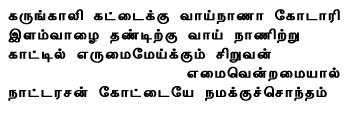


"Karungaali Kattaikku Vaai Naana Kodari
Elam Vaazhai Thandirkku Vaai Naanitru
Kaatil Erumai Meikkum Siruvan Yemai Vendramayal
Naatarasan Kotaiyae Namakku Sondham"

meaning, the axe that did not give up even for the hardest Karungaali (a tree) wood, gave up for a tender plantain (banana tree) stem. Here he compares himself as the axe that won all the great poets (Karungaali Trees) but fell for a boy (The plaintain stem). The boy, who herds cattle in the pastures, won me. So henceforth, my place is Naatarasan Kotai. And this is the story behind why Kambar switched kingdoms.

Legend says that the boy is either Lord Shiva/Lord Muruga incarnate. However, to keep up his promise, he spent the rest of his life at Naatarasan Kotai considering it as his native. Even today there is his tomb at Naatarasan Kotai. There is another interesting fact too. There is a big pond near his tomb. But that pond was not dug when Kambar was buried, but after his burial people would visit his tomb and take some of the sand from near his tomb. They mix a few pinches of the sand in the milk and give it to their children. People still believe that mixing the sand in milk and giving it to their children will make them knowledgeable persons as Kambar. As the famous quote says



"Kamban Veetu Kattu Thariyum Kavi Paadum"


meaning, "Even an inanimate loom in Kambar's home will pen a poem"


So people want their children to be knowledgeable and popular as Kambar. So they people in that region practise this. The people who came here have taken so much sand from near his tomb that over the centuries it has become a big pond.

The pitiable thing is that, nowadays, statues and tombs are being erected and maintained for people whose eternity in the Tamil world is questionable. But the tomb of the man, who has transcended the barriers of time and has an eternity in Tamil world, is in a dilapidated state. If possible, we should do something to make this honourable person known to the world and maintain his tomb in gratitude for the great work he has done

More to come, until then...

Sunday, July 02, 2006

Sagely Sivavaakiyar!

Sivavaakiyar, is a great poet who lived around the 10th Century AD and is considered one of the siddhars. Some legends say that he was the first of siddhars who lived in the ancient times. He got the name Sivavaakiyar because he uttered the word "Shiva" when he was born. His works are extraordinary masterpieces that could be done only by a person who has transcended the materialistic aspects of the world and attained the connection with the ethereal bliss. His views might sound atheistic but what he professes is beyond what normal minds can be inculcated. For this reason of atheistic tinge in his songs, his works does not have prominence in the Shaiva Literature, however many people have realised the correctness of what he says. He greatly opposed idol worship and the practices that were followed with to idol worship; basically seeking the Almighty in a stone or a statue, confining the omnipresent in a small stone and considering the stone as GOD, etc. One of his songs adorns my blog as a header. Lets see some of his songs, including the one in the header


"Nattakallai Dheivamendru Naalupushpam Saathiyae
Sutrivandhu MonaMonavendru Sollumandhiram Yaedhada
Nattakallum Pesumo Naadhan Ullirukayil
SuttaSatti Sattuvam Karichuvai Ariyumo"
-Sivavaakiyar


meaning, "You consider an erected stone as GOD and you adorn that stone with flowers, go around it chanting and muttering some mantras! how is that possible? Will that erected stone talk you when the the Almighty (Lord Shiva) is within you. Will the utensils used to cook the food realise that taste of its contents?".

Nattakallai - Natta (Erected, planted) + Kallai - possesive case of Kall (stone)
Dheivamendru - Dheivam (GOD) + Yendru - like, consider
Naalu - Four
Pushpam - flower
Saathiyae - Adorn
Sutrivandhu - Sutri (Going around, revolve, rotate) + Vandhu - Come
MonaMona - An interjection to denote murmuring and muttering
SolluMandhiram - Sollum (Utter, tell) + Mandhiram - Mantra
Pesumo - Interrogative of Pesum (Talk)
Naadhan - Lord Shiva (the Almighty)
Ullirukayil - Ull (Within, inside) + Irukayil (Staying, residing)
SuttaSatti - Sutta (Heated) + Satti (Pot, vessel)
Sattuvam - Spoon
Karichuvai - Kari (Vegetable cooked) + Chuvai (Taste)
Ariyumo - Interrogative of Ariyum (Knowing, being aware)

What he says is that the act of being in an oblivion without realising the supreme within oneself and searching elsewhere is like the utensils that do not realise the taste of food, that is within them, being cooked. Understand the Almighty within yourself. Now lets see the song in the header of this blog.

"Ninaipathondru Kandilaen Neeyaladhu Verilai
Ninapumaai Marappumai Nindra Maayai Maayaiyo
Anaithumai Agandamai Anaadhimun Anaadhiyaai
YenakkulNee UnakkulNaan Ninaikumaaru Yenganae"
-Sivavaakiyar


This song is rather song to GOD Almighty himself, his humility, simplicity and divine faith is at its zenith. Lets see the meaning, "I have never known anything other than YOU(GOD) to think. Is the illusion of my consciousness and oblivion actually an illusion or is it you? YOU (GOD) have been everything and nothingness, a being without beginning of all the beings without beginning. When will be the day when I could think that you are within me and I am within you?"

Ninaipathondru - Ninaipathu (Thinking, Imagining) + Ondru (Thing,One)
Kandilaen - Kandu (See, Imagine, Being Aware) + Ilaen - Negation
Neeyaladhu - Nee (You [GOD in this context]) + Aladhu - a variation if Illadhu indicating negation
Verilai - Veru (Other) + Illai - Negation
Ninapumaai - Ninaipu (Thought, Consciousness)
Marappumai - Marappu (Forgetting, Oblivion)
Nindra - Stand, Stay
Maayai - Illusion
Anaithumai - Everything
Agandamai - Nothing
Anaadhi - Thing without a beginning or origin
YenakkulNee - Yenakkul (Within me) + Nee
UnakkulNaan - Unakkul (Within you) + Naan (Me)
Ninaikumaaru - Thinking so
Yenganae - When, how

The next one for the common man rather atheists,


"IllaiIllai Illaiyendru Eyambukindra Yezhaikaal
Illaiyendru Nindrathondrai Illaiyennal Aagumo
Illaiyendrum UnduEndrum ErandumOndri Nindradhai
YellaiKandu Kondapaer Inipirapadhu Illayae"
- Sivavaakiyar


meaning, "You poor people claiming that GOD does not exist, GOD does not exist! Will it be true that a Being existing as non-existent (not able to see physically) to actually not exist? Those who realise the bounds of that Being that is existing as non-existent and existent will never be reborn to undergo the trials and tribulations of birth"

Illai - Negation, not existing
Eyambu - Claim, express
Yezhai - Poor
Nindra - Exist, Stand
Undu - Affirmative, Existing
ErandumOndri - Erandum (Both) + Ondri (Merge, Dependent)
Yellai - Bound, confines
Kandukonda - Found, obtain usually after searching
IniPirappadhu - Ini (Hereafter) + Pirappadhu (Being born)

Sivavaakiyar has transcended the boundaries of materialistic world as the above and other songs illustrate. He professes what the Brahmasutra (The origin of the Universe, The Composition of what is called Brahmam - not Brahma (The GOD of Creation)) says, "All of you and everything around you is Brahmam". In simple physics terms, all objects are manifestations of matter and so is all things in the entire Universe and the Universe itself is the manifestation of Brahmam. You have to realise the Brahmam with you first, don't try to give it a shape or visualise it as something or confine it to some object is what Sivavaakiyar says, a great sagely thought indeed. Lets try to think from his perspective and realise the Brahmam

More to come, until then...
Saturday, June 24, 2006

Who am I?

"Who am I?", a question that has baffled and intrigued many philosophers and metaphysicists. The question that most don't find and answer. If they find an answer to this question, most would not be able to express that verbally. It is not the social identity a person is given. It is about the inner-self, the soul, your ethereal identity - rather shortly - "The Real You". A bit confusing??? Well lets a take a look at what Thirumoolar says and see our thoughts get provoked and intrigued. Here goes the song


"Ettaan Arindhilan Yaetraval Kandilal
Thattaan Arindhum Oruvarkkum Uraithilan
Pattaangu Sollum Paramanum Angulan
Kettaen Immaayaiyin Keezhmai Yevvaray"

- Thirumoolar


meaning, "The sower of the genetic seed (Father) does not know who I am. The acceptor of the genetic seed (Mother) does not know who I am. The creator (Lord Brahma), though he knows who I am, does not tell anyone about that. Even Lord Shiva - the God of Destruction, the foreteller of the end of life - is present there at that time. See! I have been spoilt and just imagine the meanness I have been put into by illusion/oblivion that caused this"

Ettaan - The person who gives; in this context, sower of genetic seed
Arindhilan - Arindhu (know) + Elan (negation a form of Ellai, masculine gender) = The referred person does not have the knowledge
Yaetraval - Yaetra (accept) + Aval (addressing the second person feminine gender) = The person who accepts
Kandilal - Kandu (See, be aware) + Elal (negation a form of Ellai, feminine gender) = The referred person is not aware
Thattaan - Blacksmith; the one who shapes object by striking; in this context, the creator - Lord Brahma
Arindhum - Having knowledge
Oruvarkkum - Even for a single person
Uraithilan - Uraithu (tell) + Elan - He will not tell
Pattaangu - End of world, life etc
Sollum - Telling
Paramanum - (Paraman - Lord Shiva) Even Lord Shiva
Angulan - Angu(there) + Ulan (exists)
Kettaen - Kettu - Become Spoilt
Immaayai - This(Im) illusion (Maayai)
Keezhmai - Lowest point, meanest
Yevvaray - imagine how

Intriguing!!! This is what great philosophers, saints and siddhars have professed all their life. Know thyself!!! A great and difficult thing to be achieved. Lets start on a journey to find who we are for ourselves!!

More to come, until then...
Saturday, June 17, 2006

Rain - The elixir of life!

Rain is a natural phenomenon of water precipitating, but the interesting fact is that people associate it with good deeds, well being etc. More precisely, people tend to associate the amount of rainfall with the good deeds performed. If there are many good deeds performed then, there would be a good amount of rain and if bad deeds increase, rainfall decreases. Let us see what Tamil Literature has to offer. There is even a phrase in Tamil - "Maadham MUmmaari" meaning "three rains a month". Let's begin with Avaiyar with her song that goes,


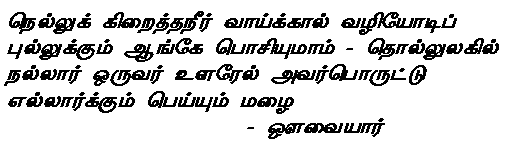
"Nellukku Iraitha Neer Vaaikaal Vazhi Odi

Pullukkum Aangae Posiyumaam - Tholl Ulagil
Nallaar Oruvar Ularael Avar Poruttu
Ellaarkkum Peyyum Mazhai"
-Avaiyar

meaning, The water that flows in a stream to irrigate the paddy also irrigates the weeds around. Likewise, for that one good person on this old earth, it rains for the benefit of all. Now the interlingual rendition,

Nellukku - (possesive case of) Nell - Paddy
Iraitha - Poured, Irrigated
Neer - Water
Vaaikaal - Stream, a shallow passage for water to flow
Vazhi - Path
Odi - Run
Pullukkum - For the grass (Pull), in this context, weed
Aangae - There
Posiyumaam - Flow, Drip
Tholl Ulagil - Old (Tholl) Earth - (Ulagu)
Nallaar - Good persons
Oruvar - (denoting count of persons) One
Ularael - Ula - Exist ; in conjunction with Oruvar - if one such person exists
Avar Poruttu - Avar: Them, respected tone of a single person; Poruttu - For a particular purpose
Ellarkkum - For all (Ellar)
Peyyum Mazhai - pour down, used in conjunction with rain (Mazhai)


Hmm, interesting, now lets see what Vivega Chinthamani has for the rains. The first song goes like this


"Vedham Odhiya Vedhiyarkku Ore Mazhai
Needhi Mannar Neriyanukku Ore Mazhai
Maadhar Karppudaya Mangayarkku Ore Mazhai
Maadham Moondru Mazhaiyena Peyyumae"
- Vivekaga Chinthamani


The meaning, "A rain for the priests enchanting the Vedhas. A rain for the king who follows good virtues and upholds justice. A rain for the women who maintain their chastity. So in all three rains a month". As usual, the interlingual rendition

Vedham - Vedhas
Odhiya - Enchanted, Recited
Vedhiyar - Priests or persons following the Vedhas
Ore - One
Mazhai - Rain
Needhi - Justice
Mannar - (plural of Mannan) Kings
Neriyan - Follower of good virtues
Maadhar - (plural of Maadhu) Women, normally used in a collective sense
Karppu - Chastity
Mangayar - (plural of Mangai) Women
Maadham - Month
Moondru - Three
Peyyum - downpour, fall (esp rain)


This above song is a representation of the fact that if the good deeds grow and good virtues are upheld, the nature will bestow good rains that will help the planet flourish with all good things. Now, here the opposite where if good deeds dwindle, then nature punishes those act. The following song can be interpreted in two ways, one as nature grieving the situations that would have caused the persons involved to perform such acts; the other as a punishing measure for those who are expected to follow good virtues but they stray away blatantly.


"Arisi VittridUm Andhanarrkku Ore Mazhai
Varisai Thappiya Mannarkku Ore Mazhai
Purushanai Kondra Poovaiyarkku Ore Mazhai
Varudam Moondru Mazhaiyena Peyyumae"
- Vivekaga Chinthamani


the meaning, "A rain for the priests who sell rice. A rain for the kings stray away from their virtues. A rain for the women who kill their husbands (Rather in the non-literal sense, women who betray their husbands). So in all, three rains a year".

Arisi - Rice
Vittridum - Selling
Andhanarr - Priests
Varisai - Duties, Order, Queue
Thappiya - Escape, Default, Missing to perform duties
Purushan - Husband
Kondra - Kill, Destroy
Poovaiyar - (plural of Poovai) Women
Varudam - Year

Some people say, that the only one of the three rains mentioned in the first song actually happen (A rain for the women who maintain their chastity) and that too not every month. And all the three rains mentioned in the second song occur without fail. I am not sure as to the correctness of the comments. The points in the above two songs of Vivega Chinthamani and in Avaiyar's song bear some correlation - "For the purpose and the benefit of the good, nature will bestow goodness for all."

More to come, until then...

Wednesday, May 17, 2006

An unsolved conundrum about a bullion!!

The world would have been aware of the famous bullion mystery Yamashita's Gold and many Filipinos are digging even today to search it. But there is one in Tamil Nadu. In a place called Marungapallam, within the Peravurani jurisdiction of Thanjavur District (Thanjavur, also called Tanjore - The place of the great Brahadeeshwara temple). The inscriptions on the rock carvings in the temple of Lord Shiva at Marungapallam has one similar unsolved conundrum about a bullion. The puzzle is unsolved to this day. It has a story behind it, but first the inscription in the form of a song. It goes like this,
"Ezhuvaanukkum Thozuvaanukkum Edaiyilay
Kaakai Mookin Nizhalilay
Kalvar Pogum Vazhiyilay
Kandaalum Kammaalan Kannilay
Ezhubadhu Kodi Pasumpon"
- Inscription at Lord Shiva Temple
in Marungapallam

meaning -

"Between the one who rises and the one who worships,
In the shadow of a crow's beak,
In the path used by thieves,
Even if seen only recognisable by the goldsmith,
There is Seventy Crores pure gold"

The interlingual rendition is as follows,
Ezhuvaan - The person who rises, probably the Sun
Thozhuvaan - The person who worships, probably the human
Edaiyilay - in between
Kaakai - Crow
Mookin - possessive case of Mooku - beak, nose
Nizhalilay - possessive case of Nizhalal - shadow
Kalvar - Plural of Kalvan - Thief
Pogum - Going
Vazhi - Path or route
Kandalum - Seeing, in this case, even if seen
Kammaalan - Goldsmith
Kannil - in the Eyes (Kann)
Ezhubadhu - Seventy
Kodi - Crore
Pasumpon - Pasumai (fertile, pure, rich) + Pon (Gold)

Well, now the story behind it. There once lived a goldsmith who had somehow acquired a huge bullion of gold. He kept that information as a secret and he began the purifying process of the gold. So while purifying the gold, he collected the wastes which were like impure iron and threw it away as it had no use or value. This aroused suspicion among the spies of the then king of the region and the secret was delivered to the king and the king ordered his men to get that gold. The goldsmith on knowing that the secret is not a secret anymore, hastily went to hide the gold. And he hid that bullion in some place and to safeguard that place, he sacrificed his own daughter to the Gods (a cruel practice that was believed in those days), called Kaavu Koduthal in Tamil meaning sacrificing life for some purpose, and wrote the above song in an inscription and committed suicide. The waste product that the goldsmith dumped was collected by people and used as a cure to Anaemia. It was named as Nagur Raththa Sogai Marundhu (Nagur - a place in Tamil Nadu near Thanjavur; Raththa (Blood) Sogai (non-vitality) - Anaemia; Marundhu - Medicine). And it is said that people actual got cured of anaemia. Whatsoever be it, the place where he hid that gold is still a mystery to this day as Yamashita's Gold

More to come, until then...
Friday, May 05, 2006

The Glorious Garuda

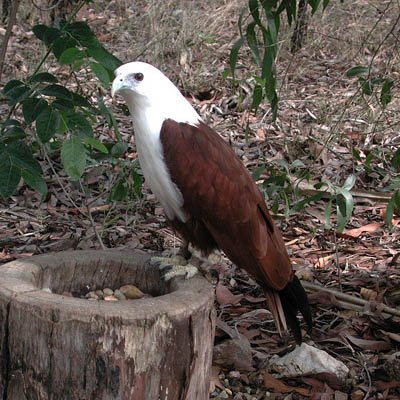
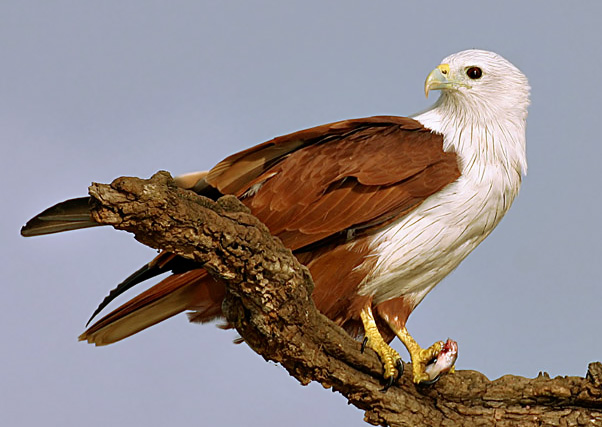
Garuda - The Brahmini Kite - is one of the most revered birds in India. It is the mount/vechicle of Lord Vishnu. It is also called the Krishnar Parundu/Kazhugu meaning the Kite/Eagle of Lord Krishna. The Garuda is so sacred that is worshipped as a deity named Garudaazhwar in many Vishnu temples. It is even a strange phenomenon that it circles the temple in which auspicious events like the Kumbabishekam and other yearly festivals are being conducted. Garuda is believed to have strange powers that even its shadow would act as an antidote to the poison of a snake and alleviate the effects of the venom. I am not sure about the truth of the statement, but the belief exists. There is even a sacred text, in Sanskrit, called The Garuda Puranam in its name. Tamil to has its part about Garuda. And seeing a Garudan is a good Sagunam (omen), a Tamil song goes like this


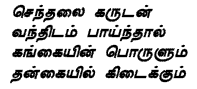
Senthalai Garudan
Vandhidam Paainthaal

Gangayin Porulum
Thann Kayil Kidaikkum

- Anonymous


Let me do the interlingual rendition in a bit, first the meaning. It means that if the vivid headed garudan crosses to your left when you start any important event. It indicates a good sagunam that you will get the rare and sacred items of the river Ganga in your hands. The river Ganges is said to be originating from the head of Lord Shiva and so it is so sacred that it cleanses all the sins of the humans. So things got from the Ganga is considered rare and sacred. And obtaining things from the Ganges is not so easy in those days. So if a Garudan flies past to your left, then it indicates a good sagunam. Now the rendition

Senthalai - Red headed, vivid headed (in this context)
Vandhidam = Vandhu (Come) + Idam (Left) - Comes to your left
Paainthal - dive, pounce
Gangayin - Of Ganga (River Ganges)
Porul - Items, Substances
Thann - One's Own
Kayil - In hand(Kai)
Kidaikkum - Will be gotten


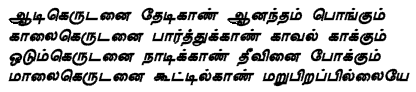
Aadi Garudanai Thedi Kaan Anandham Pongum
Kaalai Garudanai Paarthu Kaan Kaaval Kaakkum
Odum Garudanai Naadi Kaan Theevinai Pokkum
Maalai Garudanai Kootil Kaan Marupirappillaiyae
- Anonymous


meaning, search and find the Garudan in the month of Aadi and you will find joy filling your life. Wait in expectation of the arrival of the Garuda in the morning and see it, it will be a sentinel in your life. Seek the elusive Garudan and envision it, it will destroy all your sins. See the Garudan accompanied by Lord Vishnu in the evening, you will cross the ocean of birth, attain salvation and will never be reborn to meet with all the suffering of birth.

Aadi - Dance; Tamil Month of Aadi (Falls between July and August), auspicious month for the Gods.
(Temples would be crowed during this month and it is not easy to worship the deities in the temple. So you would have to search amongst the crowd to find the deities. Garuda being one of the deities, should be searched and worshipped)

Thedi - Search
Kaan - See
Anandham - Joy, Merry
Pongum - Overflow
Kaalai - Morning
Paarthu - verb. See; adjective. carefully; In this context Edhirpaarthu meaning in expectation
Kaaval - Watch, Sentinel
Kaakum - Protect
Odum - Running
Naadi - Seek
Theevinai - Sins, actions causing sins
Pokkum - Remove, eliminate
Maalai - Evening
Kootil - In the nest (Koodu); accompanied by someone or something
Marupirappillayae = Maru (Again) + Pirappu (Birth) + Illaiyae (No, Negation) - No rebirth

Not only the Garudan, but other birds and animals are venerated and associated with the gods in India. For example, the Snake (Lord Shiva), the mouse and the elephant (Lord Ganesha), the rooster (Lord Muruga), Lord Hanuman (the monkey God), the cow (The Kamadhenu), the bull (Rishaba Devar - mount of Lord Shiva), the buffalo (mount of Yama), the tiger and the lion and so on and so forth. Even the dog is worshipped as the mount of Lord Bairava and even a scorpion has its place. The list goes on. The idea of venerating animals is not to start off any superstition among the people, but it has spiritual, biological and jurisprudential reasons. The spiritual being to the envision the Supreme being as the manifestation of all life forms, the biological being to conserve the ecology and those beings should be in existence, the jurisprudential being, that every animal has its right to existence. I am not starting off any potential argument, but just elucidating the essence of such beliefs.

Apart from the Garuda, one more bird is known to indicate sagunam. It is the Sembothu or the Senbaga, I don't know the exact English name for the bird. But it would be in the size of a cuckoo and has a vibrant orangish brown colour in it body. The song that indicates is


Bothidam Paainthal Maelthadam Vaiyaadhae
- Anonymous


meaning, if the Sembothu flies past to your left, don't dare to step one more foot. Rather it indicates a bad or an unsuccessful sagunam. To be more precise of the meaning, the belief is that if the Sembothu passes to your left while you are about to venture out something, it will not materialise whatever the effort you put.

Bothidam - Bothu (Sembothu) + Idam (Left) - Sembothu going to your left
Paainthaal - dive, pounce
Maelthadam - Mael (Top, Above, More) + Thadam (Path, Tread, footprint) - Treading foot on the path
Vaiyaadhae - Vai means Keep, Vaiyaadhae - negation of Vai

People associate birds and animals to predict the happenings, these beliefs can neither totally be believed nor can be disregarded as superstition. But we have to accept that every life has to be respected and they all have the right to coexist and we cannot hunt them or their habitat leading to their extinction. Maybe, our forefathers thought that at least these spiritual association with the birds and animals could bring about some ecological balance.

Some fascinating pictures of the Garuda...


The majestic Garuda - Brahmini Kite

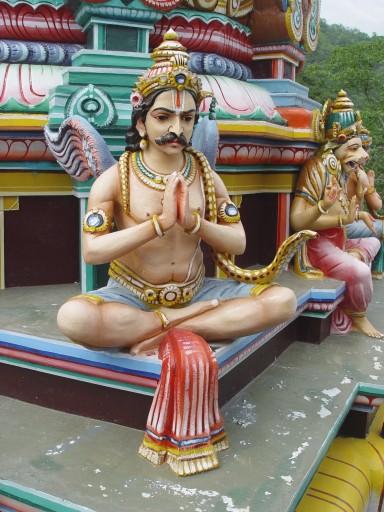
Sculpture of Garuda on a temple's gopuram

Front view of Garuda

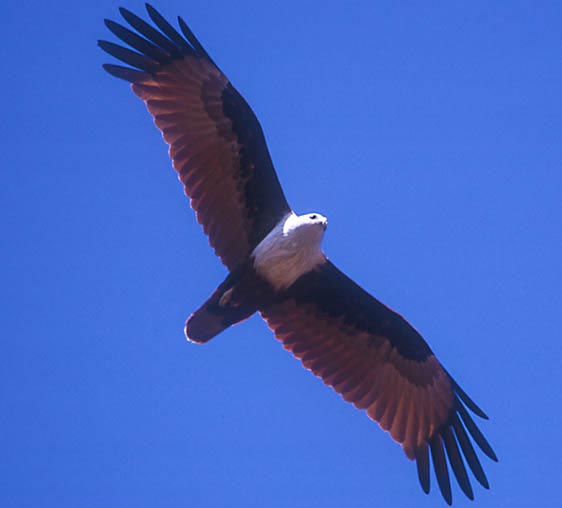
Garuda in flight


Side view of the Garuda

More interesting things to come, until then...

Sunday, April 30, 2006

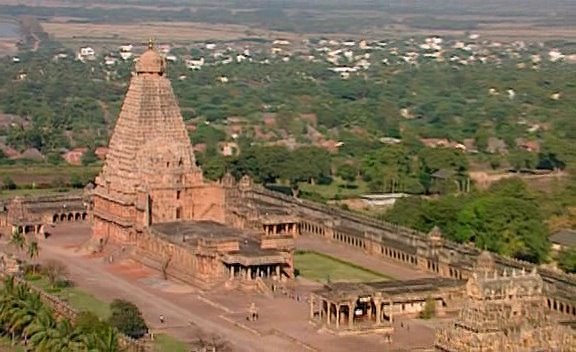
King RajaRaja Cholan and his magnificent splendour

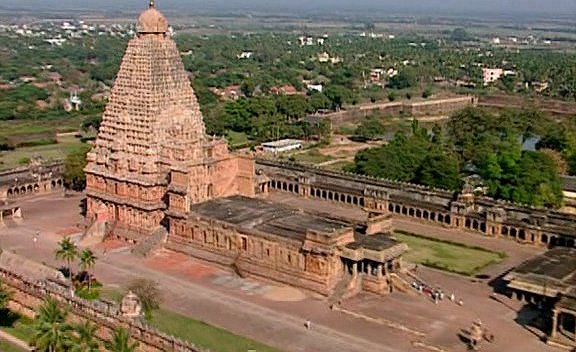
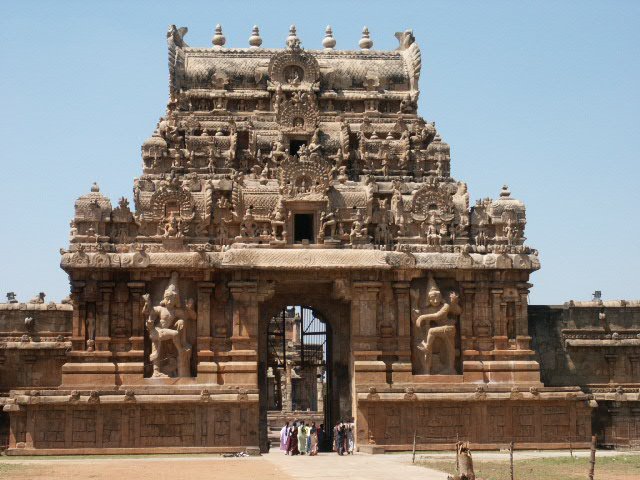
Some magnificent pictures of the great King and his work!!!


King RajaRaja Cholan


Spectacular view of King RajaRaja Cholan's magnificence


Another spectacular view of the temple


Entrance to the temple - The Gopuram

More to come, until then...